In a recent article here by EisnerAmper on hedge fund boards, the firm states that independent, well-structured boards are crucial for hedge fund risk management. Our experience confirms this. Boards with the right mix of regulatory, investment, and operational expertise are better equipped to oversee compliance, manage conflicts, and withstand scrutiny. Good board composition isn’t just good governance but also a safeguard against risk and future disputes.
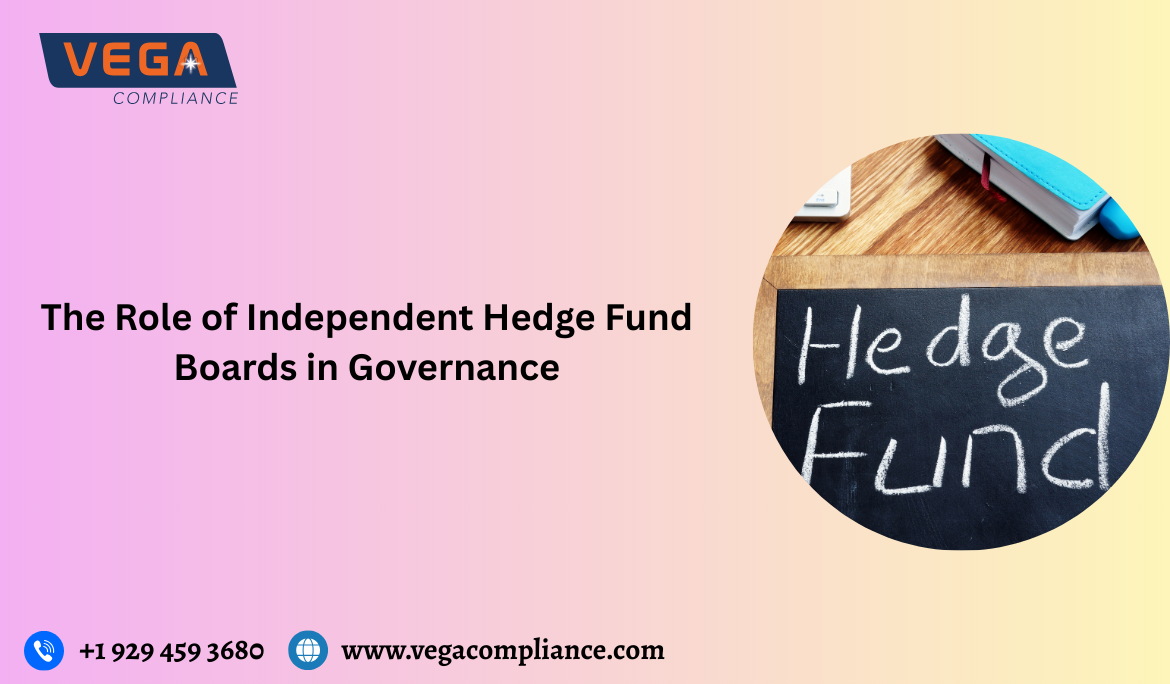
Independent hedge fund boards seem to no longer be a “nice to have” governance feature; they are a core expectation of sophisticated allocators and a focal point for regulators scrutinizing risk management, valuations, and conflicts of interest. For top-tier funds, the question is not whether to have independent directors, but whether the board has the right experience, time, and independence to challenge managers and protect investors.
Why Independent Boards Matter Now
EisnerAmper rightly emphasizes that the SEC is concentrating on portfolio valuation practices, conflicts of interest, safeguarding investor assets, the accuracy of fee and expense allocations, and other compliance issues in hedge funds. Institutional investors, in turn, are investing heavily in due diligence and placing governance quality near the top of their decision criteria. A board possessing at least one director with compliance expertise is increasingly seen as a strategic asset, enabling genuine oversight of high-risk areas, rather than merely fulfilling a regulatory requirement.
A majority‑independent board, as EisnerAmper notes, sends a clear signal that a manager is willing to be supervised, including constructive criticism, by compliance-oriented risk professionals who are not economically or operationally dependent on the fund complex. In cross‑border and U.S. structures alike – whether through a formal board or an advisory board – independent oversight has become a de facto best practice for managers who want to attract and retain sophisticated, long-term capital.
The Board’s Fiduciary Responsibilities
EisnerAmper’s article highlights core board responsibilities: fraud and misconduct detection, adherence to risk limits and strategy, oversight of NAV and performance reporting, supervision of service providers, and review of information disclosed to investors. Each of these areas maps directly onto SEC and examination priorities that stress fiduciary duty, fair valuations, transparent fee practices, and robust compliance programs.
What a High‑Impact Independent Director Adds
EisnerAmper underscores that independence is not enough; the board must collectively possess portfolio management, operational due diligence, audit, compliance, regulatory, and market‑structure expertise. This is precisely where a compliance‑focused background with litigation expert witness experience becomes valuable. A director who has served as an expert witness has deep familiarity with how things can go wrong in real cases – valuation disputes, fee and allocation controversies, supervision failures, and breakdowns in controls. This sharpens their ability to spot red flags early.
At VEGA Compliance, the practice centers on compliance, supervision, and controls for banks, broker‑dealers, RIAs, hedge funds, and other alternative investment managers, with decades of in‑house experience at major Wall Street firms and in complex securities litigation. That experience translates into practical boardroom value: asking regulator‑grade questions, anticipating enforcement and litigation angles, and stress‑testing whether governance, valuation, and conflict‑management frameworks will hold up under scrutiny.
Board Capacity, Diversity, and Regulatory Credibility
Against a backdrop of evolving SEC exam priorities and heightened focus on private funds, boards that feature experienced compliance professionals send a strong signal to both regulators and investors that the fund is serious about risk management and fiduciary duty. For managers aiming to differentiate themselves in capital‑raising, an independent director with a proven regulatory and litigation‑tested track record can be a decisive factor.
Elevate Your Board
For hedge fund managers and institutional allocators who recognize themselves in this analysis – concerned about valuations, conflicts, controls, and the next SEC exam – this is the moment to strengthen the board with independent, regulation‑savvy leadership. VEGA Compliance offers precisely this combination of governance, compliance, and real‑world enforcement insight, tailored to high‑end hedge-fund and private-fund structures.
To explore adding an experienced, independent director to your hedge fund or advisory board, contact VEGA Compliance in confidence here to discuss board roles, committee participation, or advisory mandates aligned with your strategy and investor base.
References:
- https://www.eisneramper.com/insights/financial-services/hedge-funds-risk-management-0814/
- https://www.houlihancapital.com/sec-2025-examination-priorities-comprehensive-guidance-for-private-fund-managers/
- https://www.cohnreznick.com/insights/alternative-investment-funds-navigating-sec-landscape
- https://corpgov.law.harvard.edu/2009/01/31/best-practices-for-hedge-fund-managers-and-investors/
- https://www.mofo.com/resources/insights/230221-sec-division-of-examinations
- https://www.linkedin.com/posts/eisneramper_why-independent-boards-are-essential-for-activity-7406090659616477184-9e_T
- https://www.seakexperts.com/members/19604-mike-evans
- https://www.goodwinlaw.com/en/insights/publications/2025/12/alerts-privateequity-pif-2026-sec-exam-priorities-for-registered-investment-advisers
- https://www.linkedin.com/in/mgevans